How to Stop Impulse Buying in 3 Simple Steps
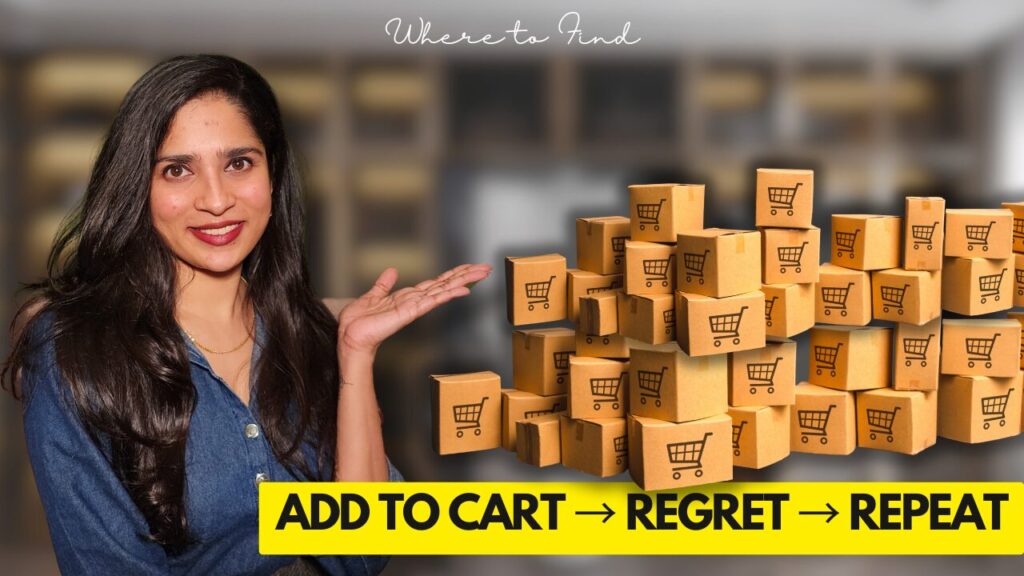
There was a time when my bank statement felt like a thank-you note to Amazon. Midnight scrolls. Flash sales. The “only 2 left” pressure. If it was trending, in my aesthetic, or promised to fix my life in three days, I probably added it to the cart!
I soon realized a very uncomfortable truth that I’ve been avoiding: My core problem wasn’t spending. It was MINDLESS SPENDING!!
So instead of trying to “control myself” (which never works long-term), I built a simple decision-making system that changed how I buy anything.
Be it clothes, skincare, gadgets, or small everyday purchases. This system isn’t about deprivation. It’s about intention, clarity, and respecting your time, money, and mental space.
Let me break it down.
Why Most of Us Struggle With Impulse Buying:
1. We’re Taught to Shop Emotionally, Not Intentionally
2. Marketing Is Designed to Hijack Our Self-Control
3. Convenience Has Killed the Pause Button
Step 1: Buy or Bye — The Why + ROI Audit for Mindful Spending:
Before you click Add to Cart or tap your card at the counter, pause and ask:
Why do I actually want this?
Is it:
- A real need?
- Or a quick fix for a feeling?
Then take it one step further and run a quick ROI check.
ROI isn’t just money.
It’s value, time saved, energy, or joy that actually lasts.
I ask myself:
- Will this give me real value within the next 30 days?
- Would I actually use it?
- Does it solve a real problem or just look good on my feed?
Real example:
I once almost bought a fancy espresso machine because I told myself it was “for efficiency.”
But when I did my Why Audit, the truth was obvious. I just liked the aesthetic of being a coffee connoisseur.
My ₹1,000 French press already worked perfectly.
ROI check? Failed.
That one pause saved me money and counter space.
Step 2: WWFYD — A Future-Self Test for Conscious Shopping:
This is my favorite step.
I picture myself six months from now, looking at the purchase and asking:
- Will future me thank me or roll her eyes?
- Will this still add value, or collect dust in a drawer?
- Will this simplify my life or quietly add new chores?
Here’s the thing we don’t talk about enough:
Everything you own costs you time.
Time to clean it, maintain it, and when to use it!
I once invested in a multi-step skincare routine that took 20 minutes every night in the name of “self-care.”
Fast forward — I now use one solid product that works in 60 seconds.
The rest of the kit? Collecting dust.
And finally, I ask:
Does this align with the person I’m becoming?
Because every purchase is a vote for your identity.
Step 3: Cool Your Cart — How Waiting Helps Stop Emotional Spending:
If a purchase passes steps one and two — great.
But I still don’t buy it immediately.
I give myself a cart time-out:
- 24 hours for small purchases
- A full week for bigger ones
This pause does three powerful things:
- It kills the impulse
- Help to fade the emotional high
- Creates space for quick research, better prices, reviews, or ethical alternatives
Here’s the wild part:
Nine times out of ten, I don’t even want the item anymore.
And if I still do after the wait?
That’s not an impulse buy! That’s an intentional investment.
This Isn’t About Buying Less! It’s About Buying Better!
This system didn’t turn me into a minimalist overnight.
It turned me into a more intentional buyer.
I still buy things I love.
I just don’t buy things that quietly drain my money, time, or mental bandwidth.
Because every “yes” you make is also a hidden “no” to something else.
Want the Full Breakdown?
I walk through this entire system with examples and context in my latest YouTube video.
👉 Watch here: I Funded Amazon’s Profits… Until I Tried This 3-Step System